Jollof rice is a one-pot, tomato-and-pepper-based rice dish found across West Africa, with Nigeria, Ghana, Senegal, and several other countries all claiming their version as the definitive one — a rivalry affectionately known online as the “Jollof Wars.” At its core, every version starts from the same idea: rice cooked directly in a rich, smoky tomato-pepper stew rather than plain water, so the grains themselves take on the color and flavor of the sauce instead of having sauce added on top afterward. What separates one country’s version from another, and one family’s from the next, comes down to the ratio of tomato to pepper, the specific spice blend, and small technique details passed down rather than written anywhere.
Why This Recipe Works
The order of operations here is what separates good jollof from great jollof. Cooking the tomato paste down before adding the blended pepper mixture removes its raw, slightly bitter edge and builds real depth into the base. Letting that pepper mixture reduce until the oil visibly separates and rises to the top is the actual sign — not a guess, a visible signal — that the stew base has cooked long enough to properly flavor the rice. And cooking the rice covered, low, and undisturbed lets it steam in the stew rather than boil, which is what gives properly made jollof its distinct texture instead of turning mushy.
- Don’t rush the pepper mixture reduction. The visible separation of oil at the top isn’t optional to wait for — it’s the actual marker that the base has developed enough flavor to carry the rice.
- Rinse your rice well before cooking. This removes excess surface starch, which helps the finished rice come out with separated, distinct grains instead of clumping together.
- Keep the lid on during steaming. Every time you lift it, steam and heat escape, which extends cooking time and risks the rice cooking unevenly.

Nigerian Jollof Rice
Ingredients
Method
- Blend the pepper base. Blend the tomatoes, bell peppers, scotch bonnet, and half the onion into a smooth purée. Set aside.
- Build the stew base. Dice the remaining onion and sauté it in the oil over medium heat until soft. Stir in the tomato paste and cook for 3 to 4 minutes, letting it darken slightly — this step matters, it takes the raw edge off the paste and builds real depth.
- Cook down the pepper mixture. Pour in the blended pepper mixture and let it cook down for 15 to 20 minutes, stirring occasionally, until the oil starts to separate and float to the top. This is the sign your stew base is ready.
- Season and simmer. Add the curry powder, thyme, bay leaves, broth, and seasoning. Bring to a boil, taste, and adjust.
- Steam the rice. Stir in the rinsed rice. Reduce to low, cover tightly, and let it steam for 25 to 30 minutes, stirring gently once halfway through. Resist lifting the lid too often — the steam is doing the work.
- Rest and serve. Once the rice is tender and the liquid is fully absorbed, fluff it and let it sit covered for 5 more minutes. Serve with your cooked chicken or beef on top.
Notes
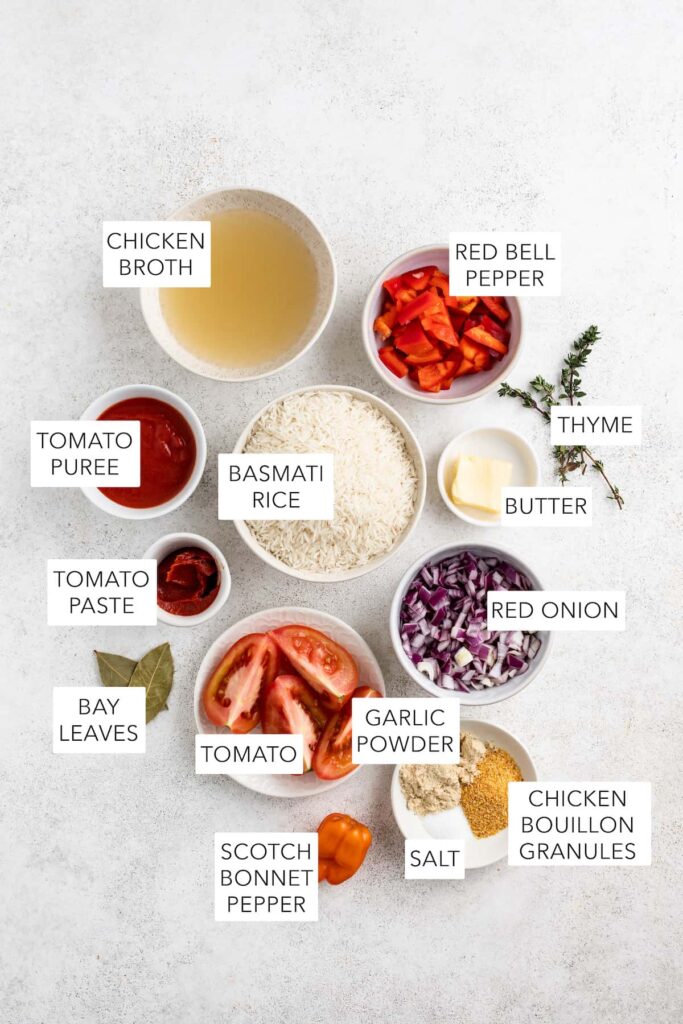
Ingredient Notes
Parboiled rice. This is non-negotiable for authentic jollof — parboiled long-grain rice holds its shape and separates properly after steaming in the stew, where regular long-grain rice is much more likely to turn to mush by the time it fully absorbs the liquid.
Scotch bonnet. This pepper is what gives jollof its distinctive fruity heat, different from the flatter heat of cayenne or jalapeño. If you can’t find scotch bonnet, habanero is the closest substitute, though it runs slightly less fruity.
Tomato paste. Don’t skip cooking it down separately before adding the blended pepper mixture — this step is easy to rush, but it’s doing real work in removing bitterness and deepening the color and flavor of the final stew.
Curry powder. In Nigerian cooking, curry powder plays more of a background, warming role than a dominant flavor — it rounds out the pepper and tomato base rather than announcing itself the way it might in other cuisines.
Storage and Reheating
Jollof rice keeps well in the fridge for up to 4 days and also freezes well for up to 2 months. Reheat with a splash of water or broth, covered, either on the stovetop over low heat or in the microwave, to restore moisture without drying the rice out.
What to Serve with Jollof Rice
Jollof is traditionally served with fried or grilled chicken, beef, or fish, alongside fried plantain and a simple side salad or coleslaw to balance the richness of the stew.
- Party jollof (smoky, grill-style): Some cooks finish the pot briefly over very high heat at the end specifically to develop a stronger bottom-pot flavor, mimicking the smokiness of jollof cooked over an open fire at large gatherings.
- Vegetarian: Skip the meat and use vegetable broth; the stew base carries plenty of flavor on its own.
- Extra vegetables: Some households stir in green beans, carrots, or peas during the last 10 minutes of steaming.
Frequently Asked Questions
What’s the difference between Nigerian and Ghanaian jollof? Nigerian jollof typically uses long-grain parboiled rice and leans on a tomato-forward base, while Ghanaian jollof often uses jasmine rice and tends to be more heavily spiced. The exact differences — and which is “better” — are the subject of ongoing, mostly good-natured debate across West Africa.
Why did my jollof come out mushy? This usually comes down to rice choice or too much liquid. Stick to parboiled long-grain rice, and make sure the broth-to-rice ratio matches what’s listed, since regular long-grain rice absorbs liquid differently.
Can I make jollof rice ahead of time? Yes, it reheats well and some people feel the flavor actually improves the next day, similar to a good stew.
Is jollof rice always spicy? The scotch bonnet is adjustable — using less, or removing the seeds, brings the heat down significantly while keeping the fruity flavor it contributes.
Do I need a special pot? A heavy-bottomed pot helps with even cooking and developing a good bottom-pot layer, but any large, deep pot with a tight-fitting lid will work.

That is everything you need to make this at home. If you try it and love it, amazing. If you tweak it and make it better, tell me how because I genuinely want to know. And when you are not cooking at home and just need to find somewhere halal to eat, we have got you covered too.
Find a verified halal restaurant near you →
— Halal Food Santi 🌙