
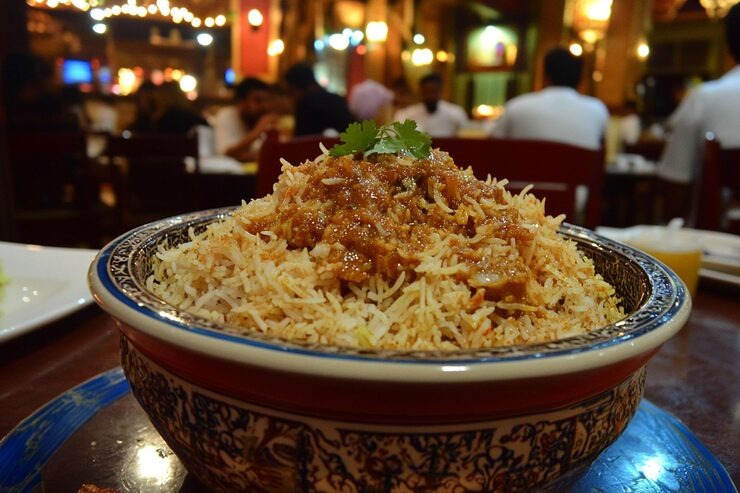
Made with fragrant spices, fresh herbs, and colorful vegetables, this Moroccan-inspired rice dish offers a warm and comforting taste experience. It’s a perfect side dish or light meal packed with authentic North African flavors.
This post contains affiliate links. If you make a purchase through one of these links I may earn a small commission at no extra cost to you. Thank you for supporting Halal Food Santi!
I did not grow up eating Moroccan food but the first time I had it I understood immediately why people are obsessed. There is a warmth to Moroccan spicing that does not feel like heat — it feels like depth. Cinnamon in a savory dish sounds wrong until you taste it and then you cannot imagine the dish without it. Saffron looks like nothing until it turns your rice this impossible golden color that makes the whole plate look like it cost more than it did.
Moroccan spiced rice came into my cooking rotation when I was looking for halal side dishes that were interesting enough to be the centerpiece of a meal and not just something you make because you needed a starch. This rice is that. It is aromatic, it is golden, it is layered with flavor, and it makes your whole kitchen smell extraordinary while it cooks.
I serve this alongside grilled halal chicken, lamb chops, or just with a simple salad and call it dinner. It works every time. It is also one of the most impressive looking dishes you can make with ingredients that cost almost nothing and techniques that require almost no skill.
This recipe is also deeply rooted in real Moroccan culinary tradition. Moroccan rice dishes draw from a spice history that spans centuries of trade routes, cultural exchange, and celebration cooking. Making it at home is a small way of honoring a food culture that deserves far more attention than it gets in American food media.
What makes Moroccan spiced rice different from regular rice
Most rice recipes season the water and nothing else. Moroccan spiced rice toasts whole spices in butter first, then blooms ground spices in that same fat before the liquid ever touches the pot. This technique called tempering extracts fat-soluble flavor compounds from the spices that dissolve into the butter and then coat every grain of rice as it cooks. The result tastes complex in a way that regular salted rice never does.
The dried fruit is not optional either. Raisins or dried apricots add tiny pockets of sweetness that contrast with the savory spiced rice in a way that is distinctly Moroccan and completely addictive. Do not skip them.
What you need (serves 4)
For the rice:
- 2 cups basmati rice, rinsed until water runs clear
- 3 cups halal certified chicken or vegetable broth
- 3 tbsp butter or olive oil
- 1 medium white onion, finely diced
- 4 garlic cloves, minced
- 1/4 tsp saffron threads soaked in 2 tbsp warm water for 10 minutes
- 1 tsp ground cumin
- 1 tsp ground coriander
- 1/2 tsp ground cinnamon
- 1/2 tsp ground turmeric
- 1/4 tsp ground ginger
- 1/4 tsp ground allspice
- 1/4 tsp black pepper
- Salt to taste
- 1/3 cup golden raisins or roughly chopped dried apricots
- 1/4 cup slivered almonds, toasted
For garnish:
- Fresh cilantro or flat-leaf parsley
- Extra toasted almonds
- Lemon wedges
Affiliate picks for this recipe:
- Royal Basmati Rice (Amazon) — the only rice worth using for this dish
- Saffron Threads (Amazon) — a little goes a very long way, one small jar lasts months
- Ras el Hanout Moroccan Spice Blend (Amazon) — if you want a shortcut, this blend covers most of the spices in one jar
- Halal Chicken Broth (Amazon) — always use halal certified broth when it is a main cooking liquid
How to make it
Step 1 — Soak the saffron
Put your saffron threads in 2 tablespoons of warm water and let them soak for at least 10 minutes. The water will turn a deep golden orange. This is how saffron releases its color and flavor. Do not skip this step and do not use boiling water which destroys the delicate flavor compounds.
Step 2 — Toast the almonds
In a dry pan over medium heat, toast your slivered almonds for 2 to 3 minutes, stirring frequently, until golden. Watch them closely because they go from golden to burned very quickly. Set aside.
Step 3 — Cook the aromatics
Melt butter in a heavy pot over medium heat. Add the diced onion and cook for 5 to 6 minutes until soft and translucent, stirring occasionally. Add the garlic and cook for 1 more minute. Add all the ground spices — cumin, coriander, cinnamon, turmeric, ginger, allspice, and black pepper. Stir for 30 to 45 seconds until the spices are fragrant and coating the onion and garlic. This blooming step is where the flavor is built.
Step 4 — Add the rice
Add the rinsed, drained rice to the pot and stir to coat it in the spiced butter mixture. Toast it for 2 minutes, stirring frequently. The rice should smell nutty and look slightly golden from the spices.
Step 5 — Add the liquid
Pour in your broth and the saffron water including all the saffron threads. Add the dried fruit and salt. Stir once to combine everything. Bring to a boil, then reduce heat to the lowest setting, cover tightly, and cook for 18 minutes. Do not lift the lid during cooking.
Step 6 — Rest and fluff
After 18 minutes, remove from heat and let the rice sit covered for another 5 minutes. This steaming period finishes the cooking and makes the rice fluffy rather than gummy. Uncover and fluff gently with a fork. Taste for salt.
Step 7 — Serve
Transfer to a serving dish. Top with fresh cilantro or parsley and the toasted almonds. Serve with lemon wedges on the side. A squeeze of lemon over the rice right before eating brightens all the warm spices in a way that ties everything together.
What to serve with Moroccan spiced rice
This rice pairs beautifully with:
Grilled or roasted halal chicken thighs seasoned simply with salt, pepper, and a little cumin. The rice is flavorful enough that the protein can be simple.
Lamb chops marinated in garlic and lemon. Moroccan food has a long tradition of pairing lamb with aromatic rice and this combination is one of the best.
A simple cucumber and tomato salad dressed with olive oil and lemon. The freshness cuts through the richness of the spiced rice perfectly.
Harira soup as a starter for a full Moroccan-inspired meal, especially during Ramadan season when this combination is traditional.
Tips for perfect results
Rinse the rice until the water runs completely clear. This removes excess starch which is what makes rice sticky and clumped. For Moroccan rice you want individual fluffy grains.
Do not skip the resting period after cooking. Five minutes covered off the heat makes a significant difference to the final texture.
The saffron is not strictly required if you cannot find it or find it too expensive. The rice will still be excellent from the other spices. But saffron is what gives it that signature golden color and subtle floral note that makes it feel special.
Leftovers reheat really well. Add a small splash of water and heat covered in a pan on low for 5 minutes or microwave covered for 2 minutes.
Variations
Make it vegetarian by using vegetable broth instead of chicken broth. This recipe is naturally meat-free and works beautifully as a main dish with chickpeas stirred in.
Add a can of drained chickpeas when you add the rice for a more substantial vegetarian meal. The chickpeas absorb the spices and add protein without changing the character of the dish.
Stir in a handful of frozen peas in the last 2 minutes of cooking for color and sweetness. This is not traditional but it is very good.
Use this rice as the base for a Moroccan grain bowl. Top with roasted vegetables, a soft-boiled egg, harissa, and fresh herbs.
Frequently asked questions
Can I use regular long grain rice instead of basmati?
Yes but basmati is the best choice here because of its length and the way it stays fluffy and separate when cooked. Jasmine rice also works. Short grain rice does not work well for this recipe.
Where do I find saffron?
Most well-stocked grocery stores carry it in the spice aisle. It is usually in a small glass jar and relatively expensive by weight but you use very little per recipe so one jar lasts a long time. Amazon has good options at reasonable prices.
Can I make this in a rice cooker?
Partially. Do steps 1 through 3 in a pan to build the spiced butter base, then transfer everything to your rice cooker with the liquid and cook on the regular setting. The flavor is very good this way even if you lose some of the control over texture.
Is this recipe good for Ramadan?
Yes. Moroccan spiced rice is a traditional Ramadan staple in North African Muslim households. It is filling, aromatic, and celebratory in a way that feels appropriate for iftar. Pair it with harira soup and you have a classic Moroccan Ramadan spread.
Can I add meat directly to the rice?
Yes. Brown small cubes of halal lamb or chicken in the pot before the onion step, remove them, build the spiced base, then return the meat when you add the rice and liquid. Everything cooks together and the meat absorbs the Moroccan spicing beautifully.